 Ћирилица
 Latinica
 English

PMISSION Project Hosts FAIC Stakeholder Meeting in Ancona and Online
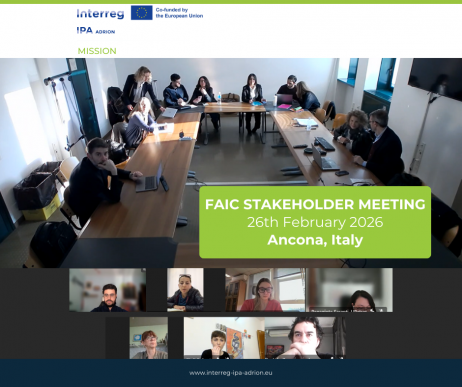
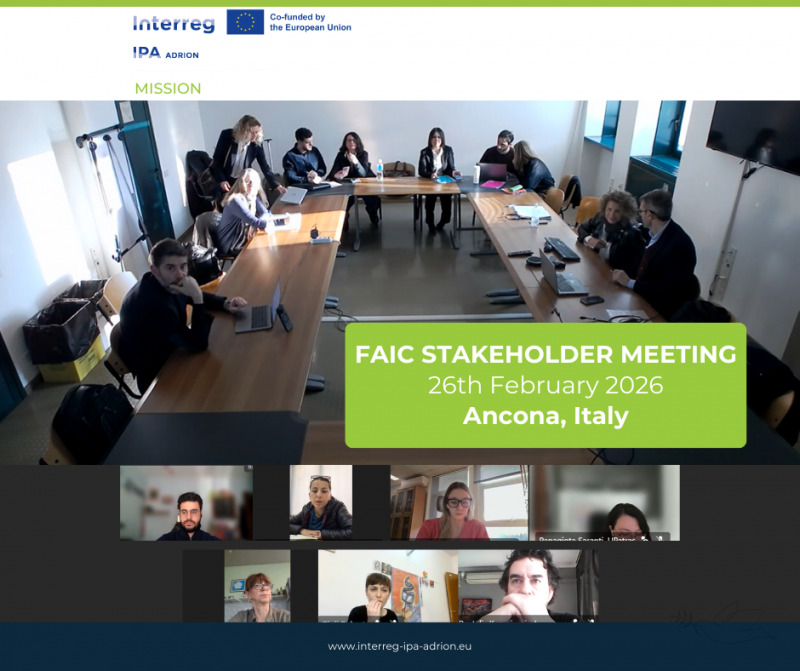
On 26th February 2026, the MISSION project successfully convened its FAIC Stakeholder Meeting in Ancona, Italy, with a parallel online session, bringing together local and regional representatives across the Adriatic-Ionian region to discuss cooperation in sustainable mobility and transport innovation.
The meeting opened with presentations introducing the objectives and activities of the MISSION project, highlighting its aim to enhance urban mobility through the integration of public transport, shared mobility services, cycling and walking pathways, and other complementary transport solutions. The session also presented the development of a MaaS SmartApp designed to provide optimised door-to-door travel solutions and real-time information on service availability and safety, while emphasising the importance of stakeholder engagement in shaping effective and user-oriented solutions.
A key focus of the discussion was the importance of collecting and integrating mobility data, including information from public transport services, shared mobility operators, and other urban mobility systems. The availability of reliable and standardised data is essential for enabling integrated travel planning, real-time information services, booking and payment functionalities, and improved safety for users. The discussion also highlighted how cooperation between municipalities, transport operators, and other stakeholders is fundamental to facilitate data sharing and support the implementation of digital mobility solutions.
The meeting concluded with a roundtable discussion, fostering dialogue among participants on possible forms of involvement in the project. Cities expressed interest in following the project developments, exchanging experiences, and exploring potential participation in the upcoming pilot phase or within the broader stakeholder network.
Through initiatives such as the FAIC Stakeholder Meeting, MISSION continues to promote collaboration between institutions, organisations, and local communities, making transport more accessible, sustainable, safe, and user-friendly.
Contact information
Phone:
+381 21 420-066
Address:
Trg slobode 1
21101 Novi Sad
Republic of Serbia